Starry Lee heads Legco with NPC hat
Ranked 7th on the hierarchy of power in Hong Kong with the Chief Executive at the top, the contest of the highly-placed presidency of the Legislative Council between two key pro-Beijing political figures has been a non-event to the city’s ordinary citizens.
A non-event to the city’s ordinary citizens
Few people cared whether the post would go to Starry Lee Wai-king or Ronick Chan Chun-ying, succeeding Andew Leung Kwan-yuen as the fourth President of the legislature after 1997. This is despite their different backgrounds and political paths. To them, who becomes the next Legco President makes little difference, if any, in the new political game in the Hong Kong SAR.
Following the seismic changes in the political scene since 2019, the increasing alignment of Legco with the government, or the executive authorities, to be more specifically, and with the national legislature, namely the National People’s Congress, has bred more bewilderment about the identity and role of the legislature.
Put it plainly, there’s a growing feeling of alienation in some quarters of the society towards the “patriots-only” legislature. The low turnout of Legco’s geographical constituency elections on December 7 is one of the indications.
Despite an increase of 1.7 percentage points from the 2021 turnout in last month’s election, the turnout rate of 31.9 percent is the second lowest of its kind in the history of the city’s direct election. Nearly 70 percent of registered voters shunned the polls held to elect 90 lawmakers; they would hardly bother to know who among the pair will chair the meetings.
The dearth of interest among the populace in the contest between Starry Lee and Chan Chun-ying reflects the depth of their apathy and feeling of irrelevance with Legco.
Break new ground in good governance
The contrast between the feeling of indifference in some quarters of the society and the glow of enthusiasm and hope the central authorities and the government have added onto the newly-constituted Legco could not be obvious.
Hours after Lee was elected, the State Council’s Hong Kong and Macau Affairs Office published a signed commentary hailing the success of the election, saying it has further proven the new Legco election system as a good system.
It described the election as an “open, transparent and healthy competition”, which has further enriched the experience of the implementation of “high-quality democracy” in Hong Kong.
The article praised the “love the nation, love Hong Kong” stance of Lee and Chan in further promoting the alignment of Hong Kong with the national 15th five-year plan, its integration with the nation and its role of serving the nation’s overall development.
The new election system, it said, has further promoted the healthy development of democracy in Hong Kong, abandoning confrontation and divisiveness and focusing on rational discussion and practical suggestions, thus shaping good political culture.
It said the new President would definitely lead the legislature in supporting the governance of the Chief Executive and the SAR government actively under the executive-led political system to jointly break new ground in good governance.
Ordinary citizens could be forgiven for failing to understand why and how legislators supporting and being led by the government in its governance would necessarily result in good governance.
Have not the previous Legco been supportive of the John Lee administration? If they have, has there been good governance since Lee came to power? The answer of opinion polls is no. A poll published in last September by a thinktank showed those who were not happy with the government outnumbered those who thought the Lee team had done a good job.
Wearing two hats
The HKMAO article said the new President should lead the lawmakers to deepen their ties with their sectors and the community, connect with the people, pool their wisdom and raise the standard and quality in legislative work.
It is too early to tell whether the new legislature will break new ground and, if yes, what it is.
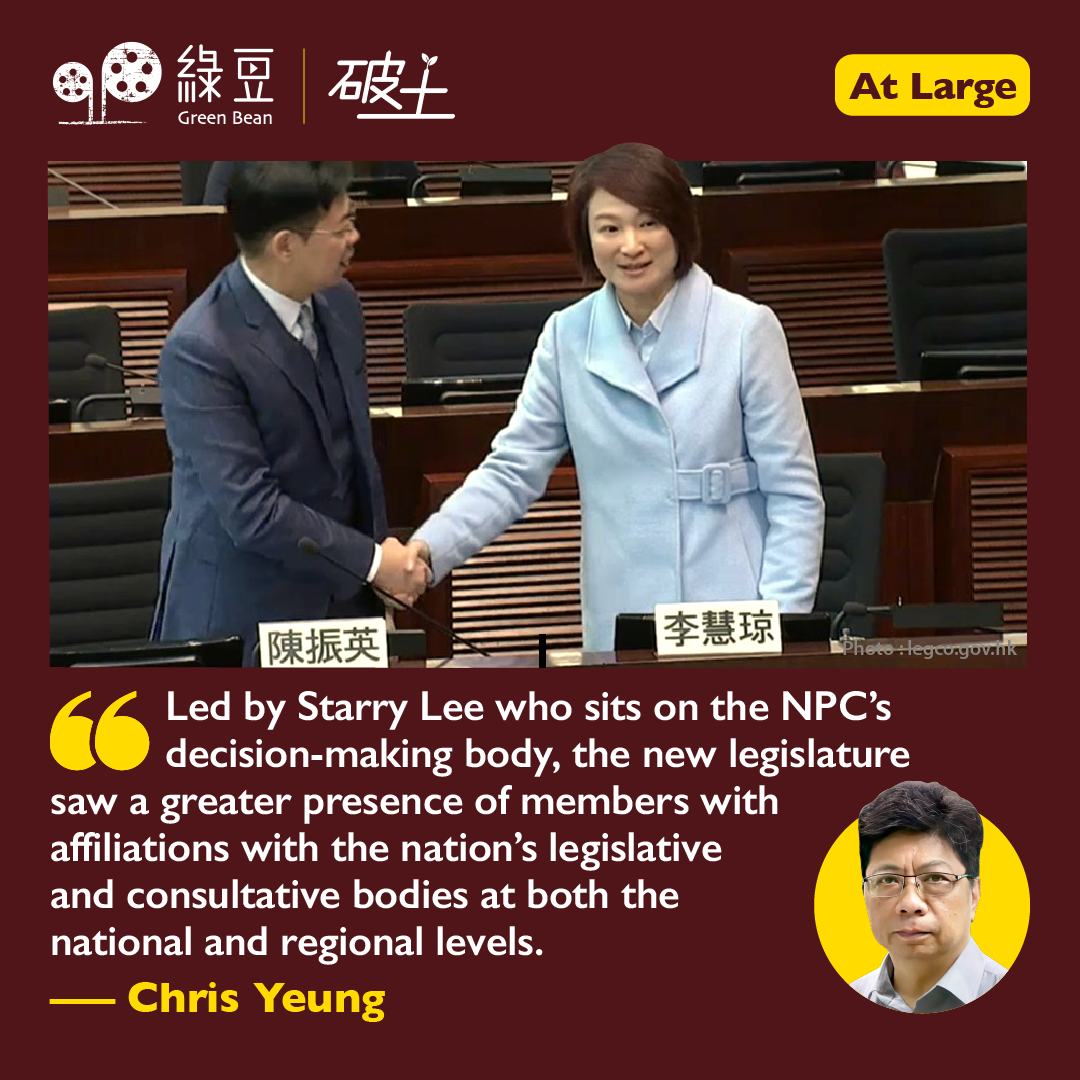
One thing is certain. Led by Starry Lee who sits on the NPC’s decision-making body, the new legislature saw a greater presence of members with affiliations with the nation’s legislative and consultative bodies at both the national and regional levels.
According to online media The Collective HK, almost two-thirds of the 90-member legislature are members of the NPC, Chinese People’s Political Consultative Conference and the two organs in provinces or municipalities. At least 45 members are either employees or directors of mainland-funded enterprises
The process of alignment of Legco with the mainland’s political structure has been accelerated. Set against the background, it is no coincidence that both the two contestants, Starry Lee and Ronick Chan, are NPC delegates.
With Lee wearing two hats as NPC Standing Committee delegate and Legco President, the political alignment between Hong Kong and the mainland at the legislature level symbolises the speeding up of the pace and broadening of the scope of policy alignments across the border.
▌ [At Large] About the Author
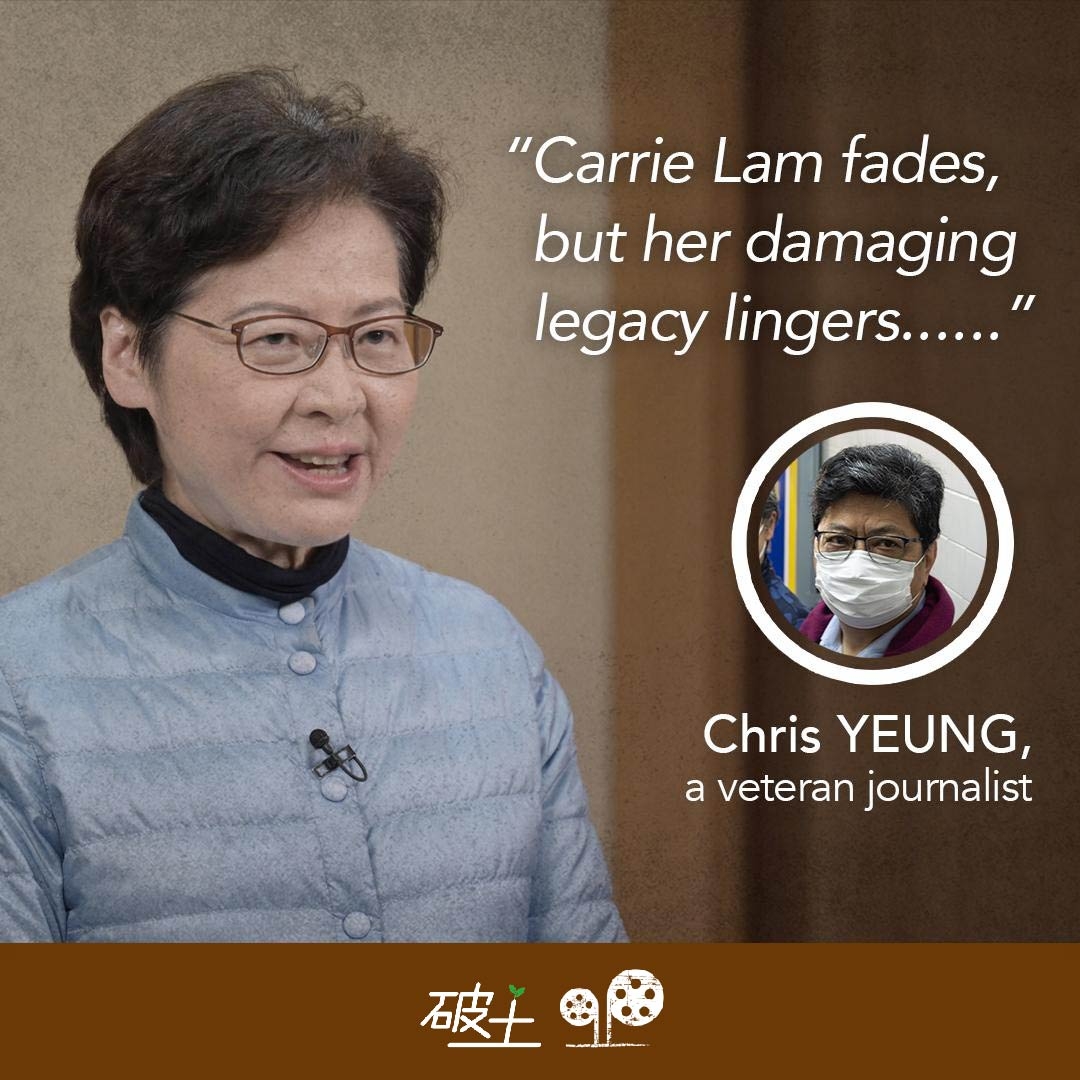
Chris Yeung is a veteran journalist, a founder and chief writer of the now-disbanded CitizenNews; he now runs a daily news commentary channel on Youtube. He had formerly worked with the South China Morning Post and the Hong Kong Economic Journal.