
Row over ‘Hong Kong is over’ never stops
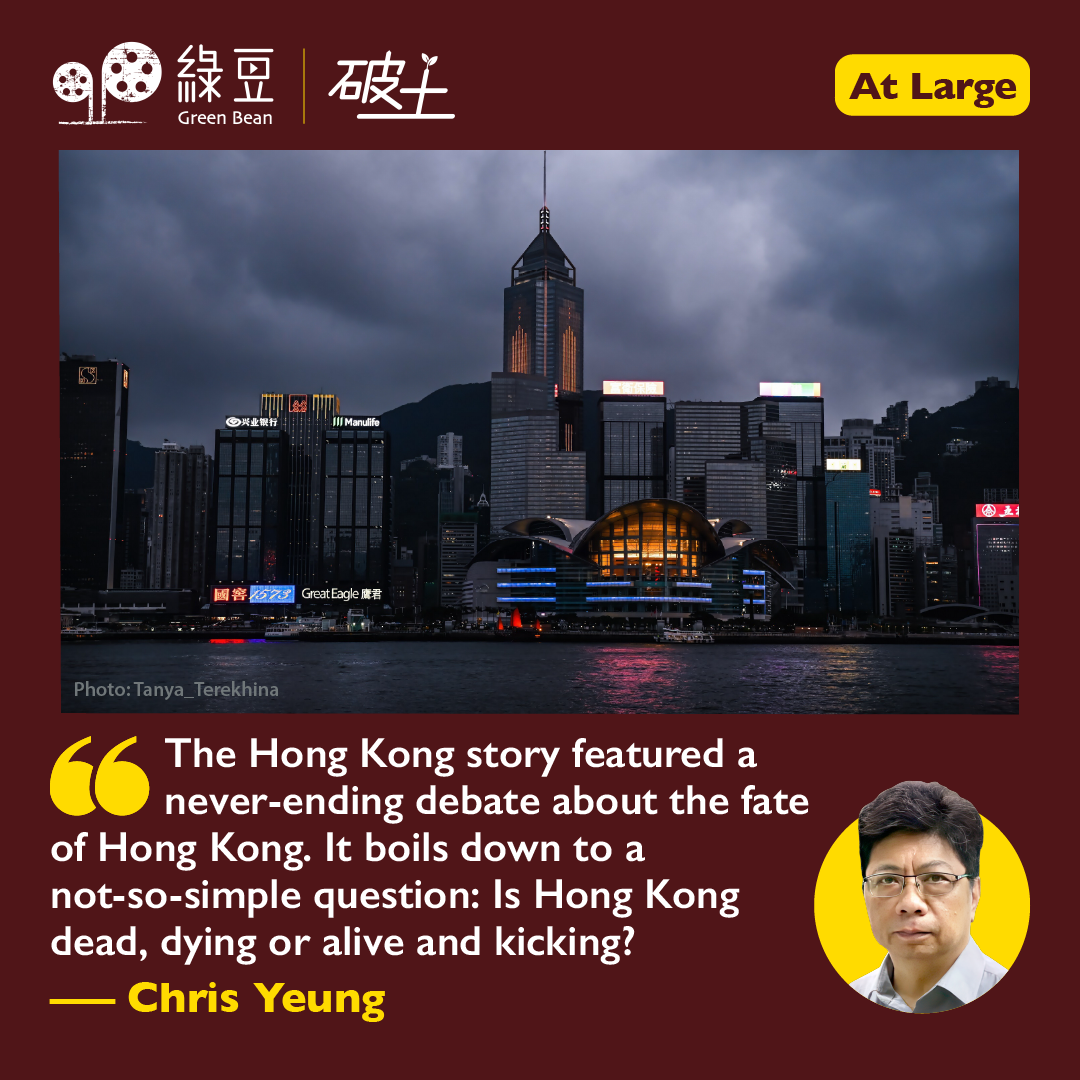
There was a feeling of deja vu in Hong Kong last week, 31 years after the theme of “The death of Hong Kong” became the cover story of the US Fortune magazine in 1995. From a British colony to a Special Administration Region under Chinese sovereignty, the Hong Kong story featured a never-ending debate about the fate of Hong Kong. It boils down to a not-so-simple question: Is Hong Kong dead, dying or alive and kicking?
The fortune of Hong Kong made some headlines last week after Stephen Roach, former Morgan Stanley Asia chair, gave his updated verdict on Hong Kong. “Well, let me be clear: the Hong Kong of old is, indeed, over. Go to Xiānggǎng and see for yourself.” Xiānggǎng is the putonghua romanisation of Hong Kong.
Roach caused a stir in February 2024 the Financial Times published his oped article. The article’s headline, “It pains me to say Hong Kong is over” , says it all. He said a confluence of three factors led to the demise of Hong Kong. They are domestic politics (the national security law); the China factor (structural problems including debt and demography) and global developments. Hong Kong, he wrote, “has been trapped in the crossfires” since 2018 when the China-US rivalry worsened.
Not surprisingly, Roach’s talk of doom and gloom rubbed the sensitive nerves of the mainland and SAR leaders. Chief Secretary Eric Chan lambasted Roach’s article as “fear-mongering”.
Beneath the surface, the story is very different
Fast-tracked to late July 2026, Roach revised his “Hong Kong-is-over” statement in his response to a reporter’s message: “‘Hong Kong is over’ seems over. What would you say about it?”
Citing Hong Kong’s return to its Number One status in IPO in 2025, he gave his answer in the online Substack saying “Beneath the surface, however, the story is very different.”
Hong Kong’s return to the top spot last year, Roach argued, was driven by listings of mainland Chinese companies such as CATL, Luxshare Precision. “By one estimate, they account for as much as 90-95 percent of recent funds raised. “Hong Kong is less a thriving global IPO market than a major platform for Chinese issuers.”
From the mainland factor behind Hong Kong’s top spot in the IPO race, Roach cited a list of developments in the past two years to argue “the Hong Kong of old is over”.
Following the enactment of the national security law, he wrote, “The rule of law, long regarded as one of Hong Kong’s greatest institutional advantages, has been severely compromised.”
He cited developments including the resignation of overseas judges, the closure of independent bookstores, the formulation of the city’s first five-year plan in alignment with China’s 15th Five-Year Plan and the influx of mainland Chinese immigrants against an exodus of expatriates.
“Facts speak louder than words,”
Flashed back to the 1990s, the Fortune magazine warning was issued when Beijing officials and Hong Kong’s political and business leaders had geared up for the offensive of critics and doubters.
Lu Ping, a then top Beijing official in charge of Hong Kong affairs, had paid visits to the United States and Japan in 1995 to explain what “one country, two systems” meant and how it would work. In Hong Kong, business leaders set up the Better Hong Kong Foundation to promote the city in major overseas countries, focusing on the US, through dialogue.
The fact Roach’s 2024 and 2026 articles were greeted by rebuttal through articles by top officials and condemnation in state-own media says something of the sharp change of the way of the new Hong Kong is responding to doubters and critics.
On Wednesday, Deputy Financial Secretary Michael Wong wrote in the Chinese-language Sing Tao that recent media commentary had attempted to “talk down Hong Kong’s prospects” and ignored the city’s “extraordinary resilience.” He did not name names, but was clearly targeting Roach.
The rebuttal article, written in Chinese and published in Chinese media, raised an intriguing question: for whom it was written?
Wong wrote, “Some critics appear to be driven by bias against China rather than objective analysis. Their criticism is neither backed by evidence nor aligned with facts.”
He argued critics and pessimists have ignored the city’s “extraordinary resilience and vitality”, turning a blind eye to the immense opportunities that continue to emerge. He cited Hong Kong’s free and open business environment, common-law system and free flows of information and capital, as well as its role as a “super-connector” between China and the rest of the world.
“Facts speak louder than words,” Wong said.
That could not be more true when facts need to be taken a closer look and objectively analysed for a balanced view of the good and the bad, the beauty and the ugly of “the Hong Kong of old” and the new Hong Kong.
▌ [At Large] About the Author
Chris Yeung is a veteran journalist, a founder and chief writer of the now-disbanded CitizenNews; he now runs a daily news commentary channel on Youtube. He had formerly worked with the South China Morning Post and the Hong Kong Economic Journal.
