
China’s long arm is already on Andy Burnham’s doorstep | Patrick Poon (East Asia Consultant, Human Rights Measurement Initiative)
Andy Burnham’s vision for No. 10 North is an ambitious one. It is a compelling vision of government that understands local realities and gives people outside London a greater voice in the decisions that shape their lives.
But if that principle is to mean anything, it cannot stop at housing, transport and economic growth. It must also shape Britain’s foreign policy. And one of the most pressing foreign policy challenges facing any future government is already on Andy Burnham’s doorstep.
Greater Manchester is home to one of the UK’s fastest-growing Hong Kong communities. Thousands of Hongkongers have rebuilt their lives here through the British National (Overseas) visa scheme after Beijing dismantled many of the rights and freedoms once promised to Hong Kong under the “One Country, Two Systems” framework. They have opened businesses, enrolled their children in local schools, joined the NHS, started new careers and become valued members of communities across Manchester, Salford, Trafford, Stockport and beyond.
Yet despite being more than 6,000 miles from Hong Kong, many have discovered that political repression does not necessarily end when they board a plane to Britain.
UK and China transnational repression
New data published by the Human Rights Measurement Initiative (HRMI), an independent think tank based in Wellington, New Zealand, illustrates just how global China’s campaign against dissent has become. According to human rights experts surveyed by HRMI, the UK was the second most frequently identified country—after the US—where the Chinese government engaged in transnational repression during 2025. Hongkongers, alongside Chinese dissidents, were among those most frequently identified as targets.
The experts described a range of tactics allegedly used by the Chinese state or its agents to silence critics overseas, including surveillance, harassment, intimidation, coercion of family members and efforts to discourage political participation. While these activities often occur beyond public view, they create a chilling effect. People begin to think twice before attending demonstrations, speaking to journalists, standing for community organisations or criticising Beijing online.
For many Hongkongers living in the UK, these findings simply validate what they have experienced for years: leaving Hong Kong does not necessarily mean escaping the reach of the Chinese state.
Genuine threats
Nor are these concerns confined to human rights reports. They are increasingly intersecting with Britain’s own national security and criminal justice system.
Last month, two men were jailed under the UK’s National Security Act after being convicted of acting on behalf of Chinese intelligence. One of them, a former Home Office employee, abused his access to government systems to obtain information relating to Hong Kong activists living in Britain. The case demonstrated that members of the Hong Kong diaspora had themselves become targets of foreign intelligence activity on British soil—not because they had committed any crime, but because they exercised freedoms that Britain rightly promises to protect. For many Hongkongers, the case confirmed a troubling reality: crossing an international border does not always mean escaping authoritarian pressure.
Against this backdrop, the proposed Chinese embassy development at Royal Mint Court, now pending judicial review, in east London have raised concerns that such a large diplomatic complex could facilitate surveillance of overseas dissidents or become an intimidating focal point for protests. Whether those concerns ultimately prove justified is for the UK authorities to determine. But they reflect genuine anxieties among people who came to Britain expecting to enjoy freedoms that are increasingly denied in Hong Kong.
The voice of Hongkonger can’t be overlooked
The UK has both a moral responsibility and a strategic interest in resisting transnational repression. If authoritarian governments conclude they can intimidate critics even after those individuals have rebuilt their lives in Britain, then it is not only the security of Hongkongers that is at stake. UK’s sovereignty, confidence in its institutions and commitment to democratic freedoms are also diminished.
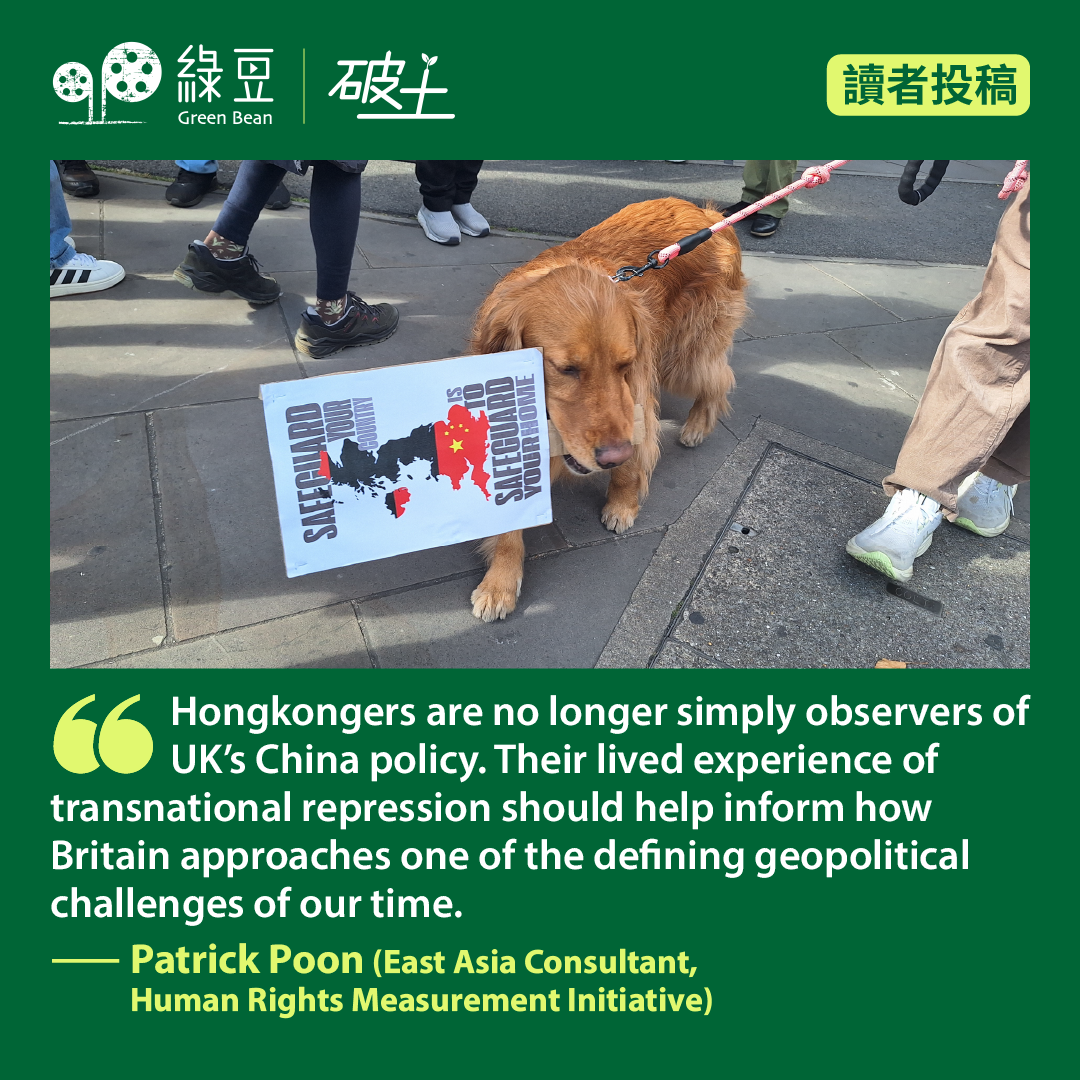
Andy Burnham has long argued that government should stand with communities whose voices are too often overlooked. Hongkongers are no longer simply observers of UK’s China policy. Their lived experience of transnational repression should help inform how Britain approaches one of the defining geopolitical challenges of our time.
A rewired Britain cannot simply devolve power. It must also recognise that the consequences of foreign policy are increasingly felt in local communities. As Andy Burnham seeks to become UK Prime Minister, he should ensure that the voices of Hong Kong people in the UK are not left outside the room when UK decides its future relationship with China.
