
After 68 years, HK student body to become history
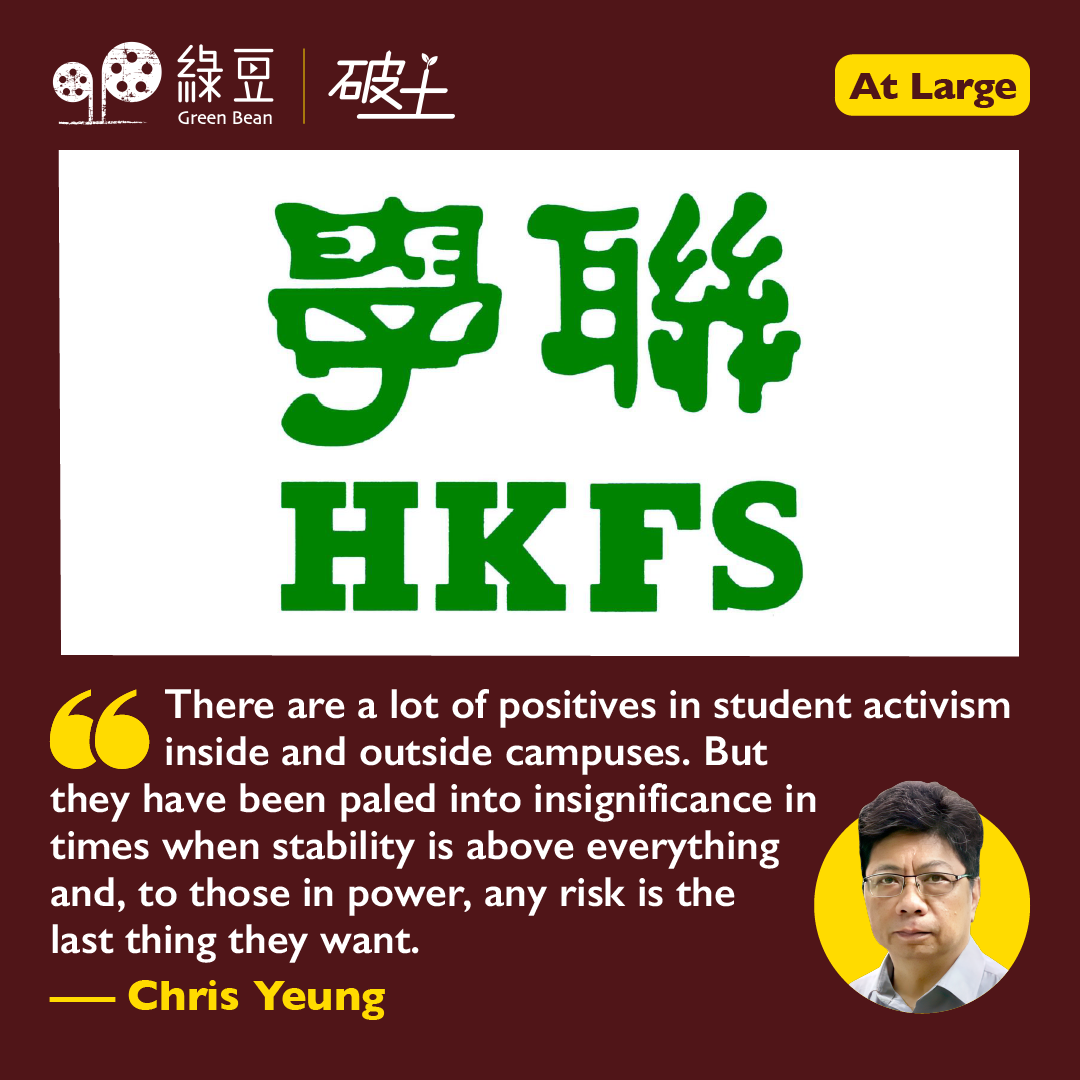
As if it is just a matter of time, news of the imminent disbandment of the Hong Kong Federation of Students, founded in 1958, last week has caused no disquiet in university campuses and society at large.
Once the champion of students’ participation in political and social affairs before and after the 1997 changeover, its last step towards history marks not just the beginning of the fading out, if not the end, of the city’s student movement but yet another sign of the withering of political activism in the once-political vibrant city.
Faced long-time harassment
Citing “increasing pressure,” HKFS announced their decision in a statement published on social media on last Thursday (Feb 5) their standing committee has passed a resolution to kickstart the process of disbandment.
They said they have been working to “unite the powers of various higher education institutes” in the city during its almost seven decades in operation. “Over the years, we have never been absent from significant political and social events.”
“Regrettably, as circumstances have changed, members of the HKFS and their supporters have faced increasingly severe pressure in recent years,” the group wrote. “After considering all factors, the HKFS has decided to draw a line today.”
HKFS did not elaborate on the “increasing pressure” they were referring to. Media cited HKFS figures as claiming they faced long-time harassment, without specifying.
Local media outlets gave scant coverage to the imminent demise of the student body, which had been plagued by internal conflicts after the 2014 Occupy Central movement. Following the shrinkage of room for student activism and public participation in civil society in the aftermath of the 2019 unrest, the HKFS has become largely dysfunctional.
Last December, the Democratic Party completed its process of disbandment, which was kicked off in January last year, following the footsteps of a list of pro-democracy bodies including political parties, labour unions and human rights groups.
The golden times of the HKFS
A netizen wrote on social media the HKFS has only had themselves to blame for its demise, accusing it as being “a longtime agent of anti-China forces.”
Its 68 years of history, however, told a more diverse story.
Flashed back to the 1970s, it flew the banner of patriotism in the movement upholding China’s sovereign rights over the Diaoyutai islands, which has been a subject of friction between China and Japan.
During the nearly five years of drafting of the Basic Law beginning in 1985, the HKFS had been given two seats in the 180-member consultative committee. Among the then representatives were Andrew Fung Wai-kwong and Benny Tai Yiu-ting.
Fung, a former Democratic Party member who resigned and later joined the government as the “spokesman” of former Chief Executive Leung Chun-ying, has emerged as one of the fiercest bashers of the democrats – and Tai.
Tai, who studied law then, became a law professor and one of the “Occupy Central Trio.” He is serving a ten-year-long imprisonment after being convicted of conspiring to commit subversion for his role in the 2020 Legislative Council primary election case.
In 2014, the HKFS and the Carrie Lam-led government held a five-a-side face-to-face dialogue on the ill-fated political reform blueprint. Among the HKFS representatives were Nathan Law, who is on a government wanted list, and Lester Shum, who returned home last month after completing a four-and-a-half-year sentence for having taken part in the 2020 primaries.
Those were among the golden times of the HKFS when students of tertiary institutions were driven by a sense of identity and belongings and ignited by passion and hopes for a better Hong Kong to come out and speak up on matters they cared for.
Those were the days when the central authorities and the government were more tolerant and relaxed about dissenting, at times radical, views and drastic actions.
After undergoing another period of low tide, the city’s student movement started to regain momentum in the late 2000s. The anti-national education protests in 2012 saw the birth of the now-defunct Demosito led by student leaders including Joshua Wong. The protests set the scene of the Occupy Central movement two years later, taking the student movement to another high point before its decline.
Stability is above everything
Come 2026, more than half of the eight major universities no longer have students’ unions primarily because of the more stringent requirements laid down by universities in the wake of the 2019 political unrest. Universities have been branded by critics as the hotbed of radical politics.
Chinese University of Hong Kong, ridiculed as “rioter university”, where one of the fiercest clashes between police and protestors erupted during the unrest, is composed of nine colleges. Seven of their student unions have ceased operation.
To say the least, student unions help connect students with schools and students themselves as a more organised, representative and powerful voice.
There are a lot of positives in student activism inside and outside campuses. But they have been paled into insignificance in times when stability is above everything and, to those in power, any risk is the last thing they want.
▌ [At Large] About the Author
Chris Yeung is a veteran journalist, a founder and chief writer of the now-disbanded CitizenNews; he now runs a daily news commentary channel on Youtube. He had formerly worked with the South China Morning Post and the Hong Kong Economic Journal.
