Legco makes history in Beijing trip, beginning or end
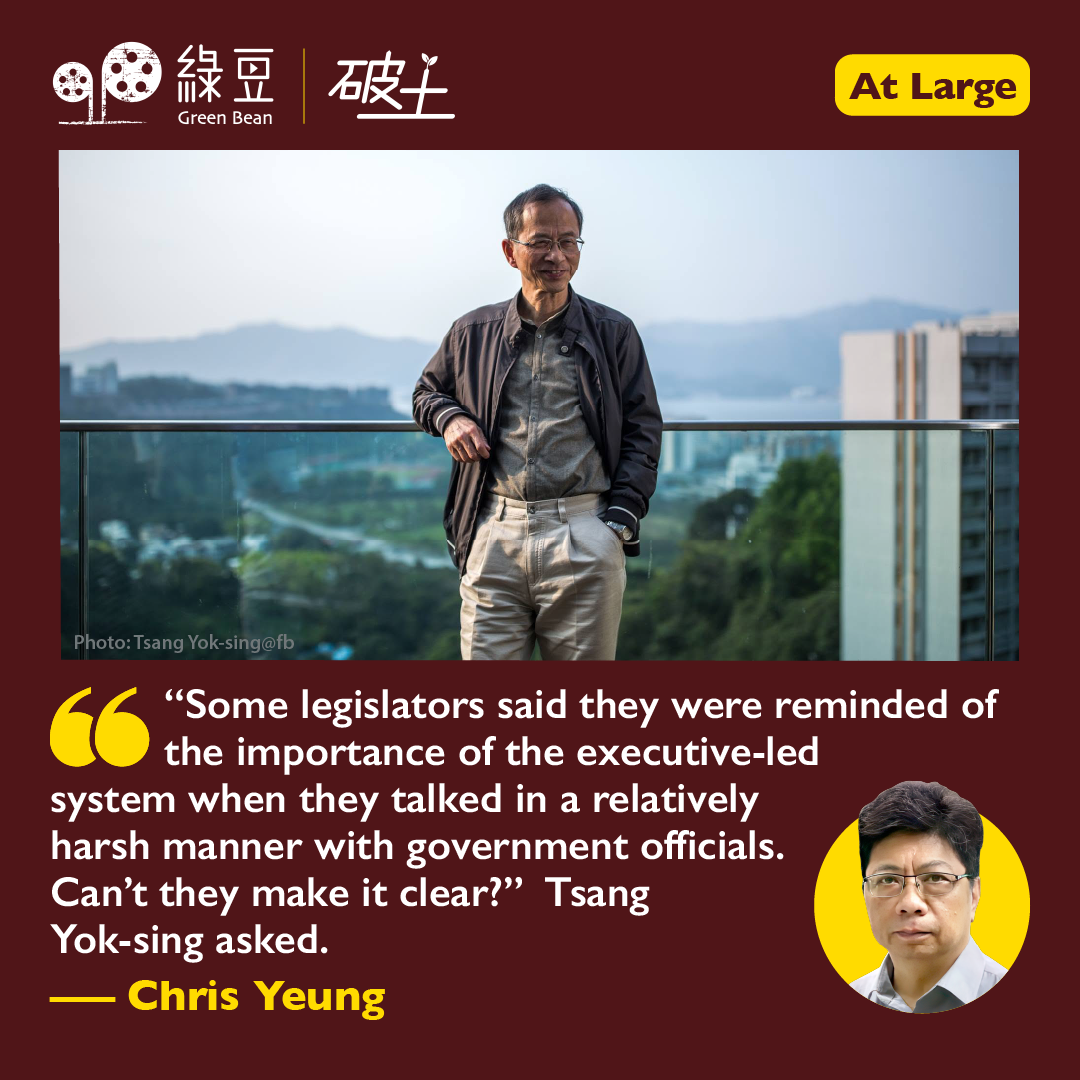
Coming on the eve of a historic study trip of Legislative Council members to Beijing last week, a question raised by former Legco President Tsang Yok-sing about the executive-led system vis-a-vis the role of lawmakers on July 13 has caused disquiet in the political circle.
It became more intriguing four days later when a sharing session featuring him and his newly-published memoir scheduled to be held during the Hong Kong Book Fair on Saturday was cancelled. He was said to have gotten sick. Tsang has not appeared in public since Tuesday and before this article was published.
The interview
Tsang waded into the sensitive issue of the executive-led system in an interview with the Chinese-language Ming Pao on July 13, two days before the annual book fair kicked off.
In the interview, he said the role and style of functioning of Legco is worth a review and what an executive-led system means is worth a study following a revamp of the composition and the cultural change of Legco.
Under the Basic Law, he said legislators are allowed to cast a vote of opposition and that no one would say criticism against the government was a breach of the executive-led system. Tsang said it was “not ideal” that the situation was unclear although there was a lot of emphasis on the executive-led system.
He noted that the word “executive-led system” was neither found in the text of the Basic Law nor the explanatory speech given by Ji Pengfei, the late director of Hong Kong and Macau Affairs Office, when the post-1997 charter was tabled at the National People’s Congress for an approval in March 1990.
“Some legislators said they were reminded of the importance of the executive-led system when they talked in a relatively harsh manner with government officials. Can’t they make it clear?” he asked.
Tsang did not specify who he was asking, but it was apparently for the ears of the central authorities and Chief Executive John Lee and his team.
Emphasis on collaborating with the executive authorities
Mildly-worded and reasonable though it sounds, Tsang’s question about the executive-led system was raised at a sensitive time, or to be exact, less than a week before 88 legislators headed for Beijing for a historic study tour.
For the first time since the handover, the city’s legislators embarked on a must-go weeklong study tour on national affairs at a state academy of public administration. They were given lectures on a list of topics including the thoughts of Xi Jinping, formulation of five-year plan, international relations, national security, legal system, artificial intelligence, new quality productive forces, aerospace and information technology developments.
Speaking after returning to Hong Kong on Friday, Legco President Starry Li Wai-king said legislators have learned from the macro-level thinking and practical experience in the mainland and would apply that in their legislative work. “(We) will fully coordinate with the governance of the SAR government in accordance with the law.”
She said they gained new insights on how best to assist the government in creating the city’s first five-year plan.
Lawmakers would draw on the experience to strengthen Legco’s research role and formulate proposals that reflected the broad interests of different parties and businesses, said Li.
Li’s emphasis on the role of Legco in collaborating with the executive authorities in its governance, in particular the task of aligning with the nation’s 15th five-year plan, is markedly different from Tsang’s remarks on the relationship between the executive authorities and the legislature in the Ming Pao interview.
The answer is clear
Tsang quoted Ji as saying in his 1990 report to NPC the relationship between the executive arm and the legislature should be governed by “mutual checks and balances, and mutual coordination.” Ji did not mention the “executive-led” system.
In tandem with the revamp of the Legco election system in 2021, Beijing and Hong Kong officials have stressed more on the role of Legco in supporting and coordinating with the executive branch, less on its checks and balances function, since then.
Against the backdrop of seismic change in executive-legislature ties, it is not difficult to understand why some lawmakers were confused when their attempts to raise a question or make a dissenting point with officials were construed as an alleged deviation from the executive-led power game.
Tsang was perhaps merely responding to a question about the rapidly-changing political system, which is a subject close to his heart after having played a key role in the power interplay, in an interview presumably about this memoir.
But as he asked the question he probably already had the answer – even before the 88 legislators began their historic tour to the nation’s centre of power. Whether it marks the beginning or the end of Legco is in the eyes of beholders.
▌ [At Large] About the Author
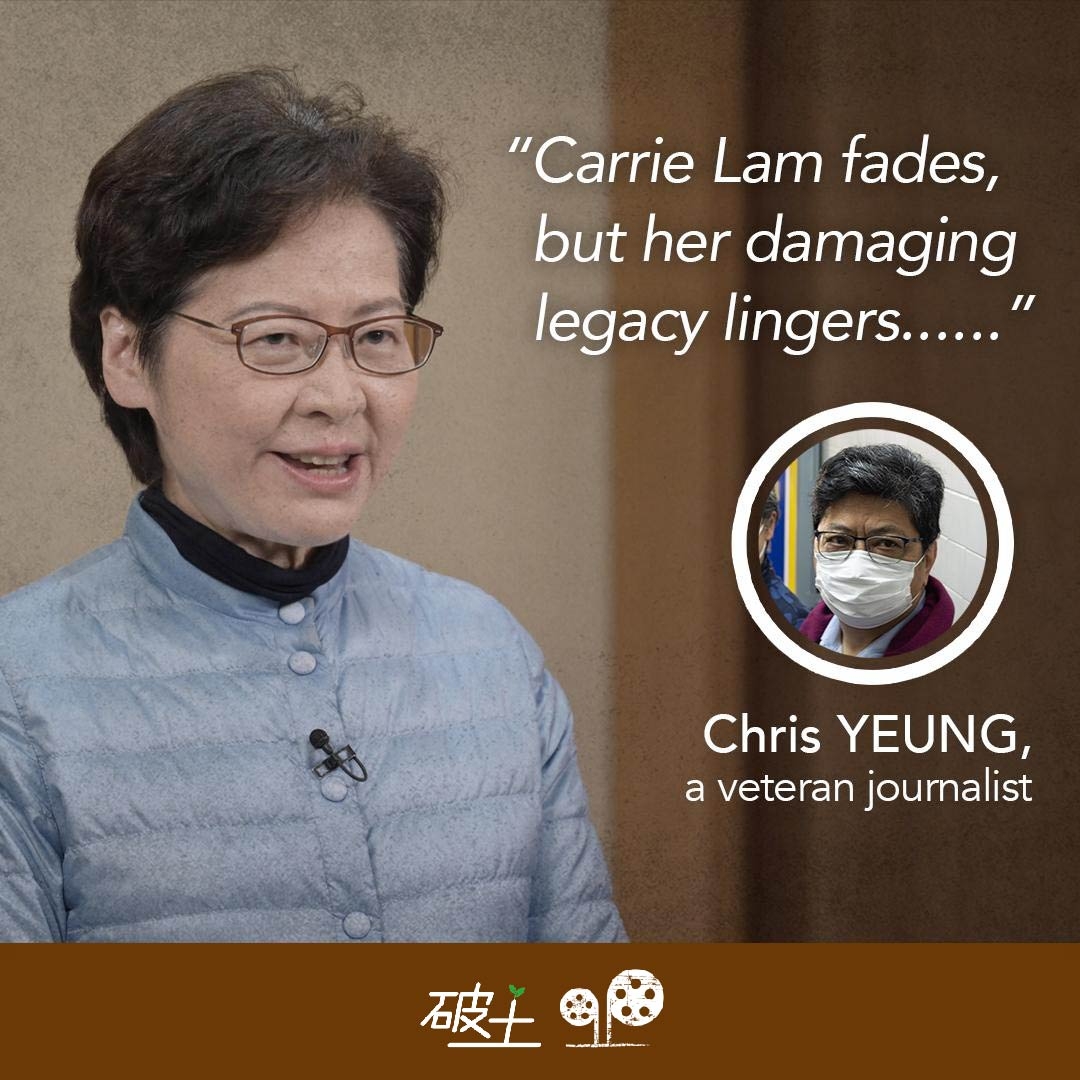
Chris Yeung is a veteran journalist, a founder and chief writer of the now-disbanded CitizenNews; he now runs a daily news commentary channel on Youtube. He had formerly worked with the South China Morning Post and the Hong Kong Economic Journal.