Five-year planning not just a plan
History is full of irony. The depth of doubts and fears of Hongkongers over the then imminent 1997 takeover in the 1980s had prompted the Chinese Communist Party leaders to promise keeping the city’s systems and lifestyles unchanged for 50 years after the handover. The phrase “horse-racing and dancing will go on” has vividly illustrated what “one country, two systems” meant for ordinary citizens.
With Hong Kong nearing the 29th anniversary of the 1997 handover, the city saw seismic changes in different facets of life in the Special Administrative Region. The pace of integration with the hinterland has been accelerated and its scope broadened and deepened.
The latest case in point is the formulation of the city’s first “Five Year Plan” that seeks to chart and shape its development to align with the nation’s 15th Five Year Plan. It is difficult to tell what it looks like until after the Hong Kong blueprint is published.
There is no doubting the top-down directive of change from governing mindset and development strategy, policy formulation and execution is set to take the Hong Kong ship towards uncharted waters.
Enhance cross border connection
Billed as the most important event on the nation’s yearly political agenda, this year’s National People’s Congress plenum officially opened on last Wednesday (March 5) has carried added significance with the tabling of the nation’s 15th five-year plan, which is expected to be approved at the end of the eight-day plenum.
Under the draft plan, Hong Kong should enhance its role as an international financial hub by strengthening its offshore RMB business and supply chain services, and speed up the Northern Metropolis megaproject. While reiterating support for the city’s “eight centres” (finance, innovation etc) strategy, it added new tasks for the city in the fields of commodity trading and supply chain services.
To give impetus to the city’s integration into national development, the draft plan prioritised strengthening cooperation between Hong Kong and the mainland in economic, trade, technological and social areas, as well as improving measures to help Hongkongers develop and live there. Connectivity across the border will be further enhanced.
All those “eight centres” strategy, mission and tasks are largely familiar. They are hardly new and surprising. Calls for speeding up the Northern Metropolis, for instance, have been repeatedly made since last year.
Time for economic transformation
Set against the political turbulence and economic shock caused by Covid pandemic, the determination of Beijing leaders to transform the city starting with restoring the political order and followed by economic transformation has become abundantly clear.
On the political front, the task of ending chaos and restoration of stability has been done following the implementation of national security laws, the jailing of a list of trouble-makers who allegedly “oppose China, disrupt Hong Kong” and a revamp of the election system.
The task of moving from stability to prosperity has proved easier said than done. Due to such external factors as China-US tensions and the mainland economy, Hong Kong’s economy is still a distance from its heyday.
Amid Beijing’s call for change, President Xi Jinping told Chief Executive John Lee during his duty visit to Beijing in December Hong Kong should proactively align with the nation’s five-year plan.
Following an elaboration of Xi’s directive by Beijing’s top man on Hong Kong affairs Xia Baolong in January, Lee revealed in an interview last month his team will formulate Hong Kong’s first five-year plan.
The principle of “executive-led” governance
The “five-year plan” strategy is not just an extension of timeframe in planning. It signifies a greater emphasis on the role of government in leading and shaping the city’s developments, in particular the economy.
It is against that background that the principle of “executive-led” governance was highlighted by Vice Premier Ding Xuexiang, head of the Central Leading Group on Hong Kong and Macau Affairs, at two separate meetings with the local delegates of the NPC and Chinese People’s Political Consultative Conference on Friday and Saturday.
He stressed that it must be a “shared responsibility” of the legislative and judicial branches and society as a whole to fully implement the “executive-led” governance system.
Ding urged the city to “grasp” the opportunities brought by China’s 15th five-year plan, calling on local entrepreneurs to proactively take part in the development of the Northern Metropolis.
Beijing’s appeal for the legislature and judiciary, businesses and society at large to rally behind the executive branch led by the Chief Executive in his or her governance cannot be faulted.
But whether the executive branch is able to lead depends more on its ability to govern with broad consensus and solid support based on sound policies and good execution.
Take the Northern Metropolis as an example. Clear positioning, good planning and lucrative business opportunities, among others, are stronger incentives than slogan-type appeal for investors to venture into the border zone. Call it market-oriented, profit-driven.
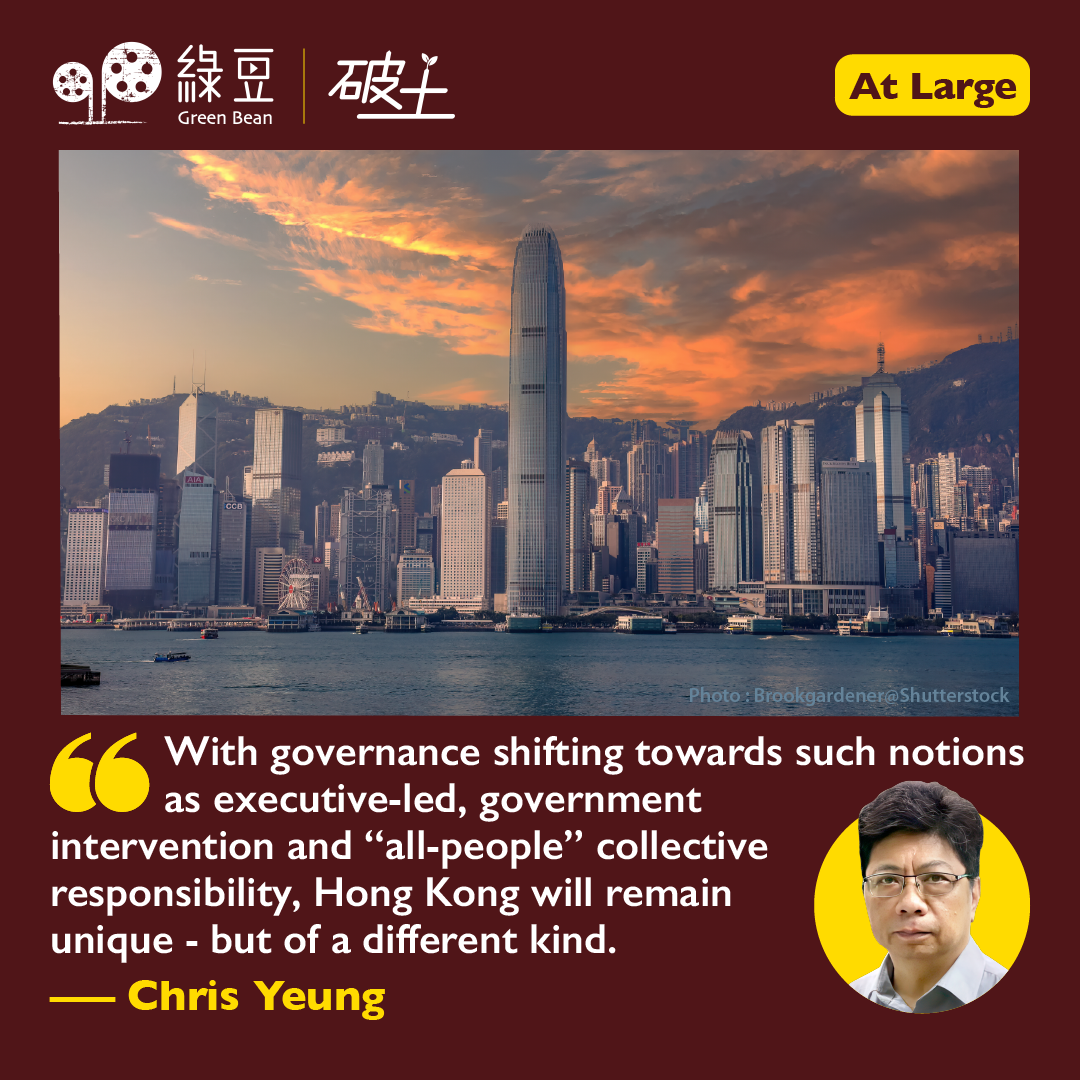
With governance shifting towards such notions as executive-led, government intervention and “all-people” collective responsibility, Hong Kong will remain unique – but of a different kind.
▌ [At Large] About the Author
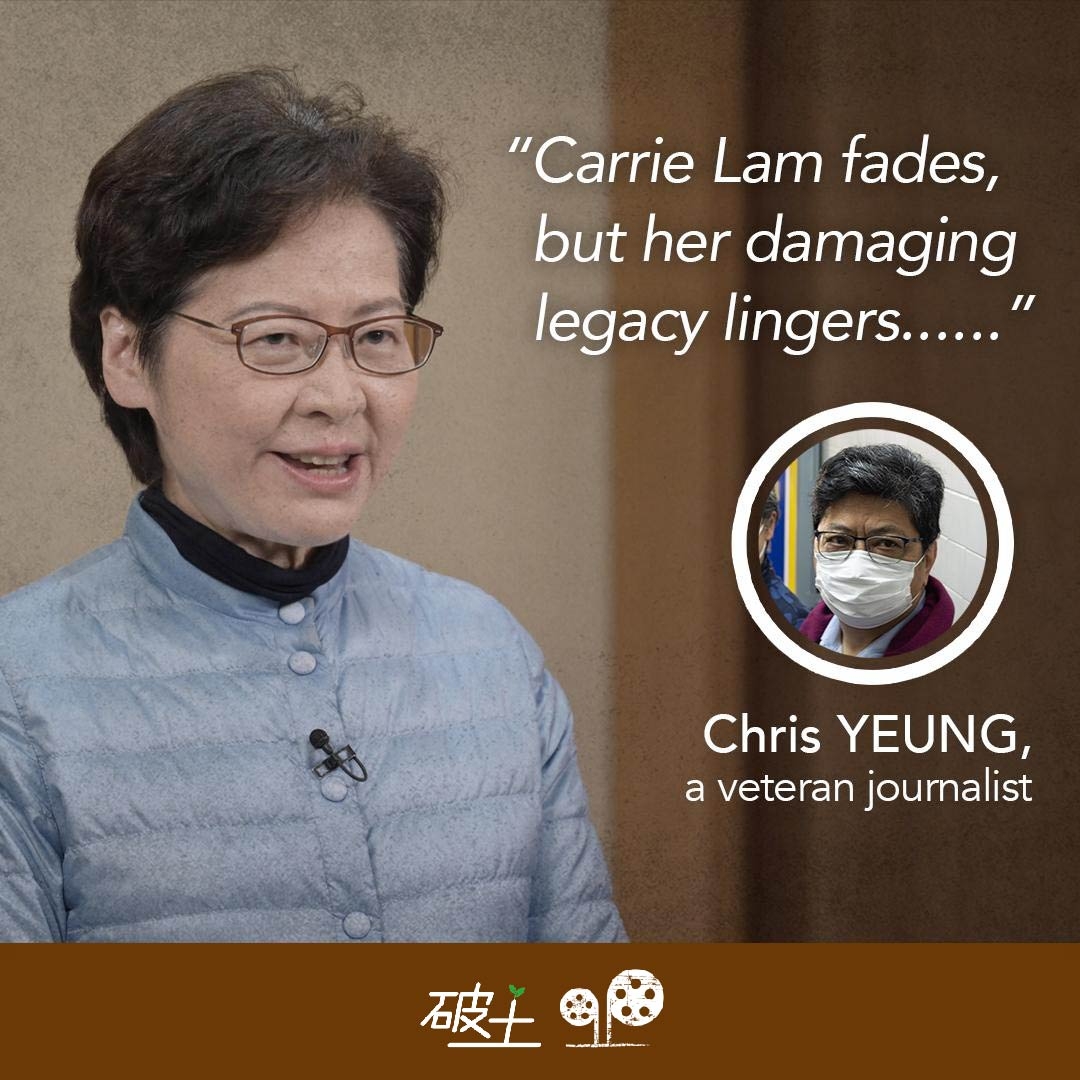
Chris Yeung is a veteran journalist, a founder and chief writer of the now-disbanded CitizenNews; he now runs a daily news commentary channel on Youtube. He had formerly worked with the South China Morning Post and the Hong Kong Economic Journal.