
The fate of Democrats and Jimmy Lai
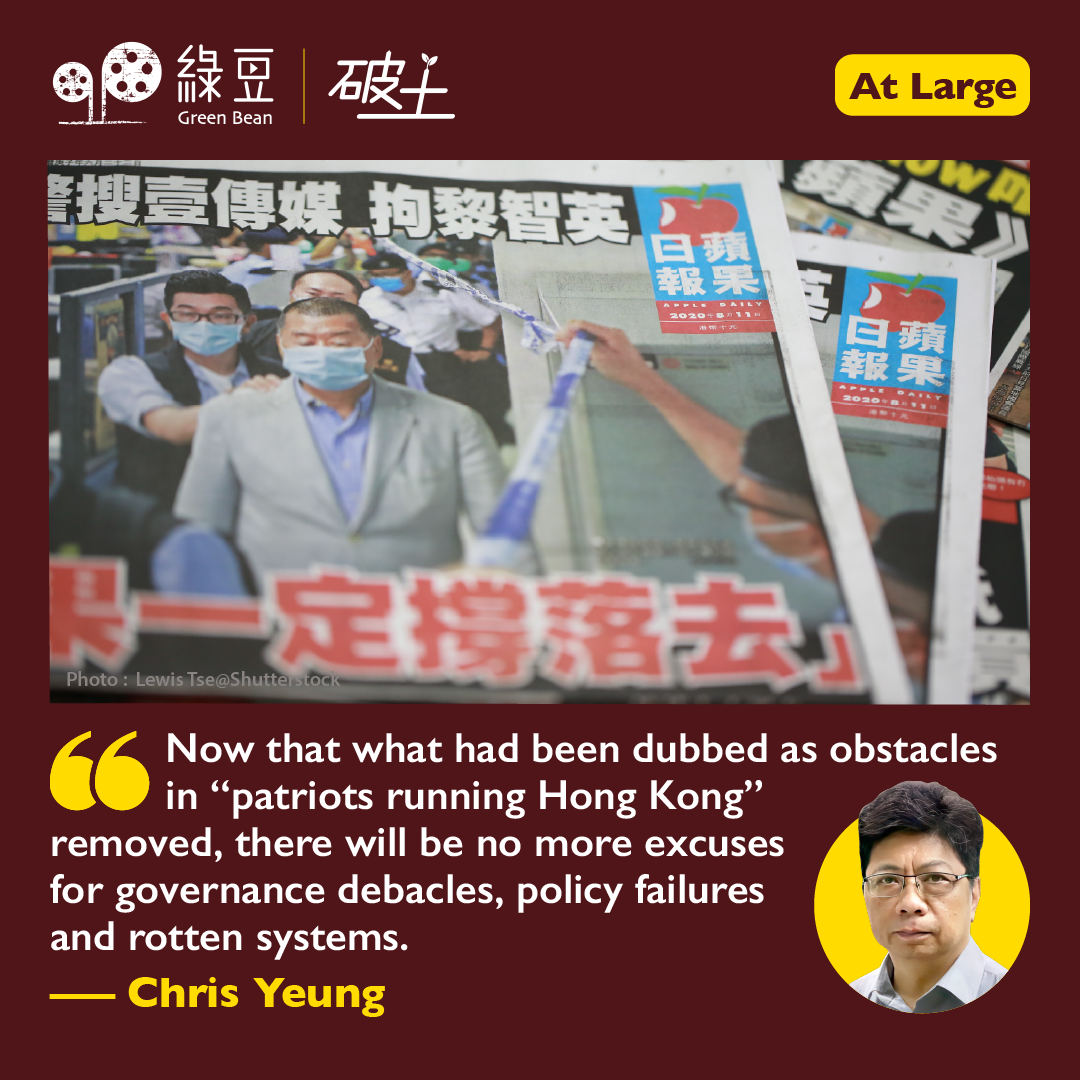
There’s no doubt it was coincidental. On December 14, the Democratic Party passed a resolution of disbandment amid mounting but unspeakable pressure for it to wind up. One day later, media mogul Jimmy Lai Chee-ying was found guilty of two counts of conspiring to commit foreign collusion and one count of conspiring to publish seditious publications. In the judgment, a panel of three designated judges handling national security-related cases described Lai as a “dominating” boss of the now-defunct Apple Daily, which he allegedly used to amplify his anti-China stance
But put together in the historical context, their fate is not coincidental.
The passage of the Democrats’ resolution had not just put an end to the pro-democracy flagship’s 31-year-long crusade for democracy and freedoms, but the city’s democratic movement, which could be dated back to early 1980s after the fate of post-1997 Hong Kong was sealed. Backing the resumption of Chinese sovereignty, the then democrats began forming political groups to have a say on how to run the city in the lead-up to and after 1997. The Democratic Party was inaugurated in 1994. The rest is history.
The Apple Daily was founded by Lai in 1995, six years after the 1989 Tiananmen Square protests and two years before the end of British colonial rule. Lai made no bones about his anti-communist DNA and his advocacy for the preservation of the city’s freedoms. In the aftermath of the July 1 rally in 2003, the media publications under Lai had played a bigger, but also controversial, role in the city’s democratic development. The rest is also history.
More than six years after the now-shelved extradition bill ignited mass protests that morphed into a territory-wide political unrest, the demise of the Democratic Party and the verdict of the Jimmy Lai trial marked the end of a decades-long chapter in the city’s political history – and the beginning of a new one.
Their fate had already been scripted
With hindsight, their fate had already been scripted following the double-barreled move by Beijing to restore order after the 2019 political unrest featuring the enactment of national security legislations and the overhaul of the two-tier election systems since then.
Under the new order of “patriots administering Hong Kong” and full implementation of the “executive-led” political structure, there is no place for the Democrats, Jimmy Lai and the Apple Daily and their various kinds in the city’s polity. The Apple Daily published its last edition on 24 June 2021 “in view of staff members’ safety.”
The Democratic Party was in tatters following the arrest of its core leaders, together with dozens of activists in the pro-democracy camp, in Jan 2021. They were charged and convicted of “conspiracy to commit subversion” after they organised primaries in a bid to win the 2020 Legislative Council election. An appeal against the verdict has been lodged by some of them.
Faced with shrinking room for political activism and difficulties including booking a restaurant for a banquet and, above all, high political risk, the party gave up their fight for survival at long last. In February, the party triggered the procedure of disbandment in the wake of some not-so-gentle advice from “middle-men” saying their mission should come to an end.
The downfall of the Democrats, Jimmy Lai and Apple Daily had been doomed following the imposition of a set of “red lines” governing the deeds and words of people from all walks of life after the enactment of the national security legislations.
The role-play of dissenting voices
Those “red lines” remain a source of bewilderment and confusion, anxiety and fear in some quarters of the society. If anything, the Jimmy Lai case and the disbandment of the Democratic Party have shed more light on the limits in freedoms that journalists, political activists and people from different sectors cannot afford to ignore.
In a nutshell, the role-play of dissenting voices, let alone opposition, in various fields ranging from politics to media, arts and film, has become increasingly vulnerable in the post-national security law era.
Different voices are part and parcel of a free society. Dissenting opinions help give checks and balances on the exercise of powers by the three branches, namely the executive, the legislature and the judiciary.
The Democrats’ disbandment and the verdict of Jimmy Lai symbolise the further fading of dissent in the Hong Kong SAR – and another step forward in the development of a mode of governance by a “patriots-only” government team with full cooperation from the legislature and the mainstream media.
Admittedly, the new mode of governance has already been in place since the first legislature constituted in accordance with the new electoral system in 2021 came into being. Now that what had been dubbed as obstacles in “patriots running Hong Kong” removed, there will be no more excuses for governance debacles, policy failures and rotten systems.
▌ [At Large] About the Author
Chris Yeung is a veteran journalist, a founder and chief writer of the now-disbanded CitizenNews; he now runs a daily news commentary channel on Youtube. He had formerly worked with the South China Morning Post and the Hong Kong Economic Journal.
