Tragic fire ignites changes in Legco election
The people have spoken up. This is a statement of fact often uttered by the winners and losers in elections after votes were counted. The just-ended Legislative Council election in Hong Kong on Sunday is an exception. That line went missing in post-election speeches by the candidates and government leaders.
This is despite the fact that the election, held every four years, saw people speaking up in their decisions to vote – and not to vote.
Of the 4.13 million registered voters, about 1.31 million have cast their votes. The remaining 2.8 million chose not to do so as a way to express their views, whatever that may be. Their voices ought to be listened to.
The government has a convenient point to hail the election as a success. The tally of 1.31 million voters who turned up on Sunday represents a turnout rate of 31.9 per cent, 1.7 percentage points higher than the corresponding figure in 2021, or 30.2 %, a drop of the actual number of people who cast their votes to 1.31 million from 1.35 million has become an inconvenient truth being ignored.
Set against the backdrop of the biggest-ever all-government promotion drive and a list of special voting arrangements aimed to ramp up the turnout rate, the drop of the number of people who cast their ballots and the marginal increase of turnout rate are an embarrassment to Chief Executive John Lee and his team.
A challenge for the Lee team
A police inspector turned head of the SAR, Lee may have done a good job in overseeing the restoration of stability from chaos in the wake of the political turbulence ignited by the anti-extradition bill protests, at least in the eyes of Beijing. The enforcement of laws, in particular the two sets of national security legislations, has effectively deterred people from crossing the “red lines” of laws.
The “rule by law” governing approach by the law-enforcement authorities has proven a stunning success. A case in point days before the Sunday election involved a minor pro-democracy group, Association for Democracy and People’s Livelihood, calling off a press conference after its chairman, Bruce Liu, was invited by national security officials for a talk.
The Legco election, meanwhile, has posed a challenge for the Lee team to do whatever it takes to persuade citizens to do something, namely casting their votes in the Legco polls.
With the importance of the election, the second after the election overhaul in 2021, elevated by Beijing, Lee and his team had pulled out all stops since early November to convince citizens why they should cast their votes.
While stressing that citizens should fulfil their obligation of voting, Lee made an 11th-hour appeal to voters for them to vote after he and his wife cast their ballots on Sunday. Lee described the vote voters cast as a vote for “facilitating reform, protecting fire victims, pooling strengths and moving forward together.”
Cases are plenty that Lee and his team have managed to ensure citizens not to do what they are not allowed and expected to do. But judging from the election figures, their capability in persuading citizens to do what they want and expect them to do, namely casting their votes, is fraught with question marks.
Most of the voters who shunned the ballot boxes in the 2021 Legco election and the 2023 District Council elections have not been convinced – and converted.
Taking into account the likely increase of votes from civil servants and “first-time voters”, that the total number of voters who cast their votes in geographical constituency elections saw a drop of about 33,000 voters shows some voters from the pro-establishment camp may have joined the “yellow” voters in shunning the election.
The Tai Po fire doubled the difficulties
This may be one of the reasons why the Democratic Alliance for the Betterment of Hong Kong has emerged as the biggest loser in terms of the total number of votes their candidates gained in geographical polls. DAB candidates secured a combined total of 680,833 votes in the 2021 Legco election. They only managed to get a total of 431,457 votes, down by 36.6 per cent. Ironically, it took 20 seats, and kept its status as the Number One party in the “patriots-only” legislature.
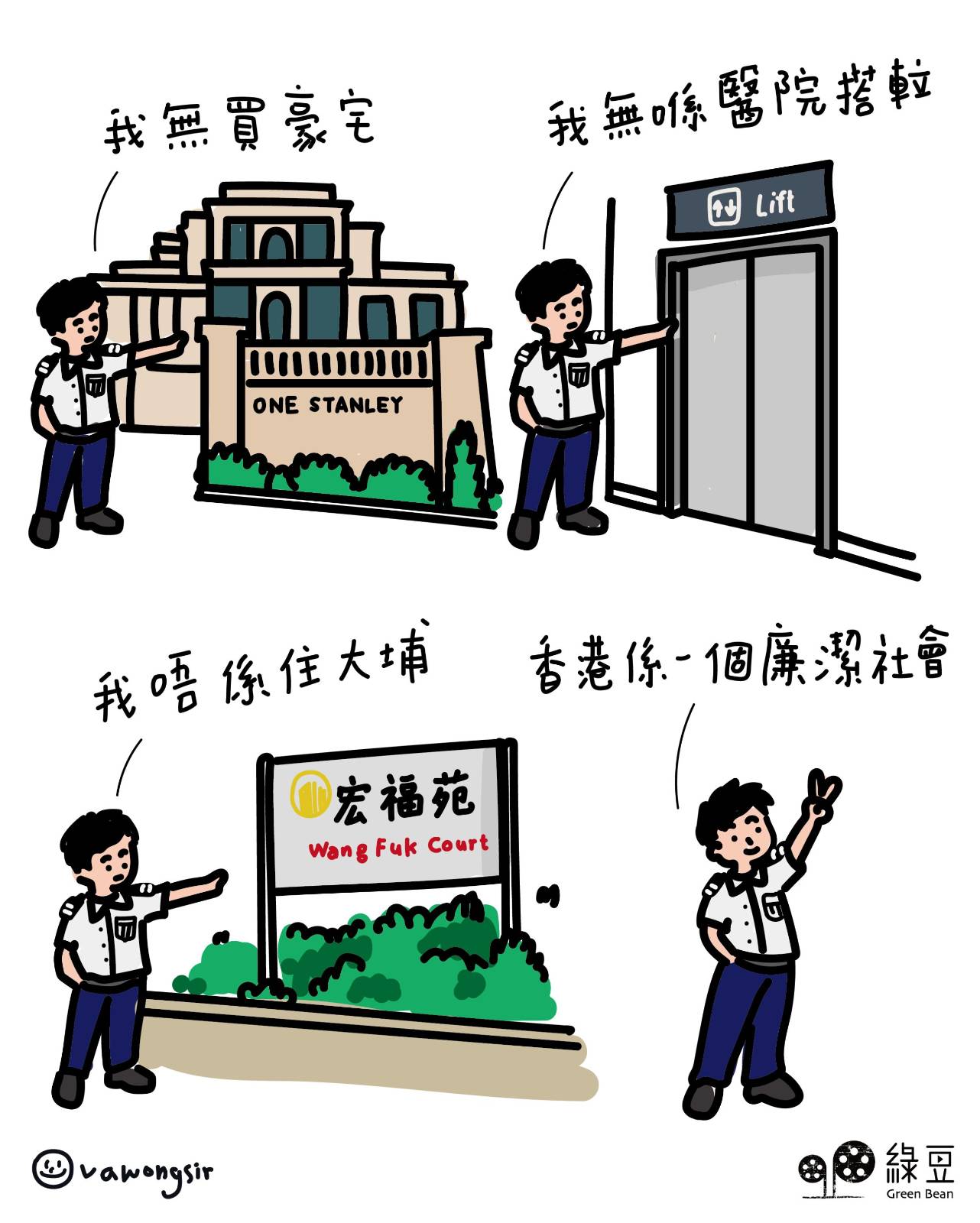
True, the alleged involvement of a second-tier member, Peggy Wong, who had served as an adviser to a landlords’ association in Wang Fuk Court, in the estate’s renovation project had taken its toll on the party.
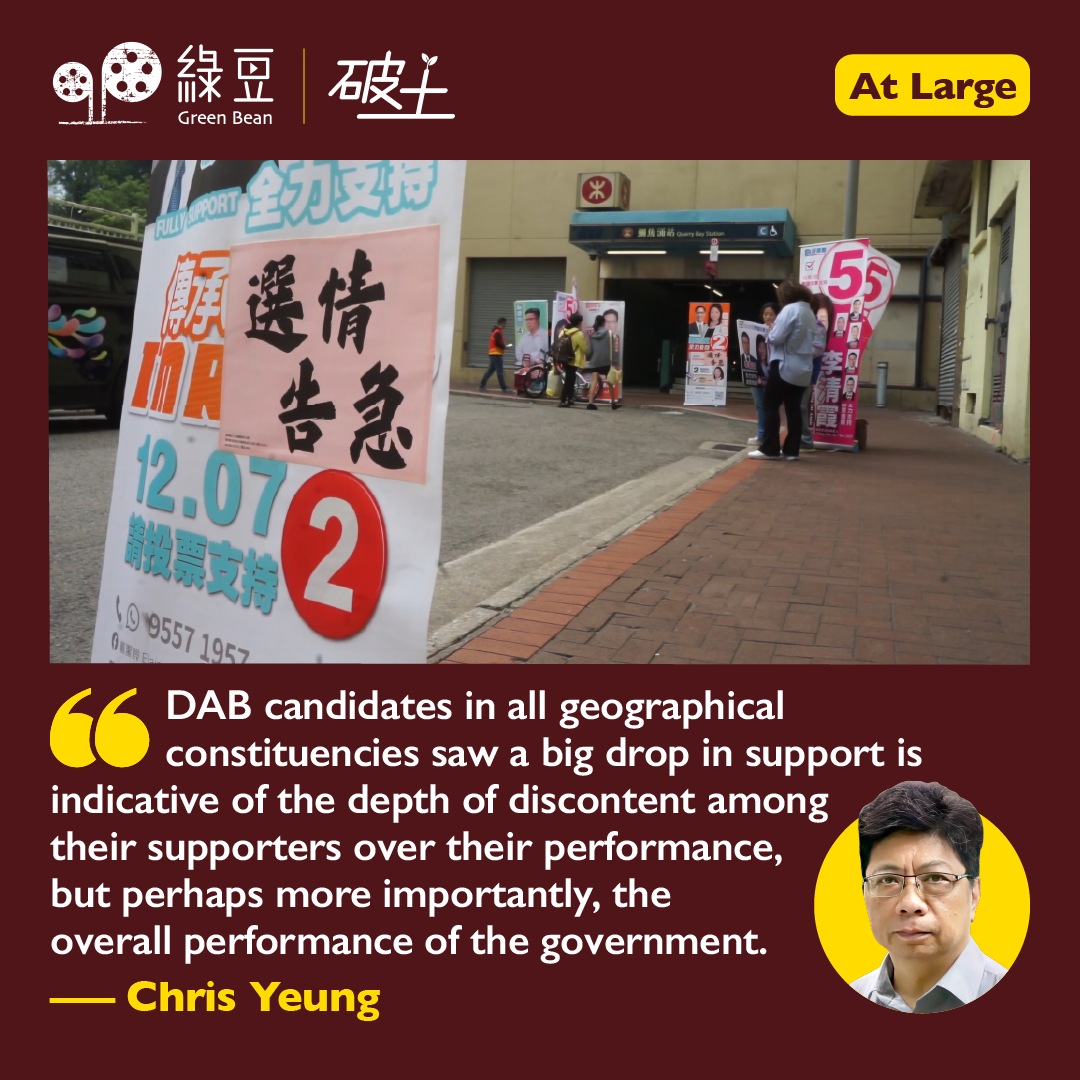
That DAB candidates in all geographical constituencies saw a big drop in support is indicative of the depth of discontent among their supporters over their performance, but perhaps more importantly, the overall performance of the government.
Although many still turned up on Sunday, their votes have drifted to other “patriots” on the list of candidates.
John Lee has held out high hopes that the tragic fire could turn out to be a blessing in disguise in mobilising citizens en masse to turn up on Sunday as a show of unity and their backing of the government in tackling the challenges ahead.
Make no mistake. That seven out of 10 voters have given a cold-shoulder to Lee’s appeal does not mean citizens are disunited and indifferent to the plight of the victims. The opposite is true as shown in their swift acts to come to their aid.
With the fundamental deficiencies of the electoral system remaining unchanged, the political backlash of the Tai Po fire has doubled the difficulties of prompting voters to cast their votes on Sunday.
▌ [At Large] About the Author
Chris Yeung is a veteran journalist, a founder and chief writer of the now-disbanded CitizenNews; he now runs a daily news commentary channel on Youtube. He had formerly worked with the South China Morning Post and the Hong Kong Economic Journal.